


















Reflections from the Whale panel at Food & Hotel Asia (FHA) 2026
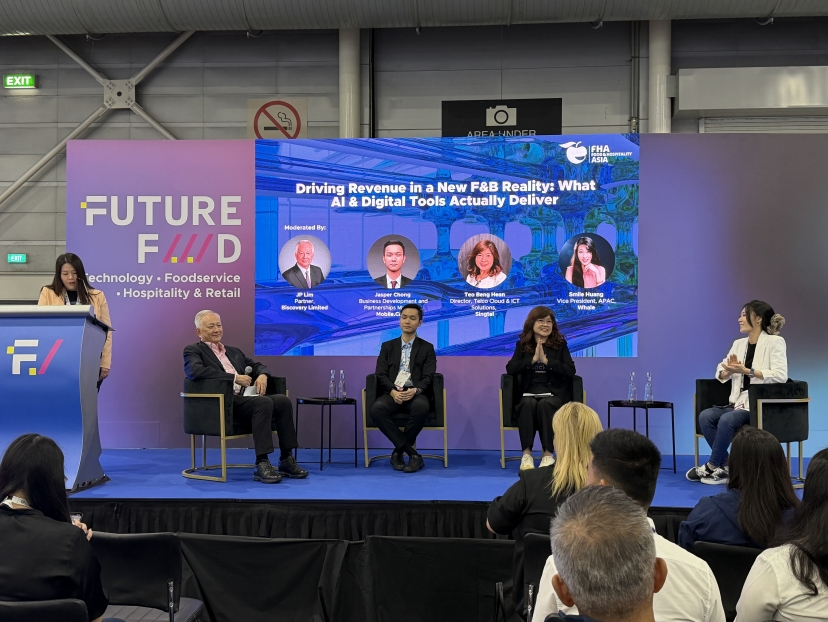
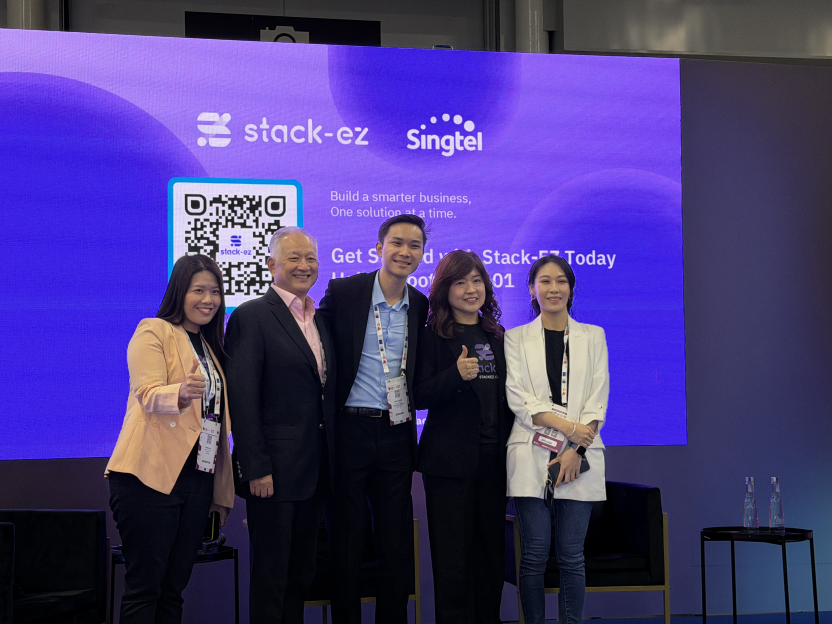
At Food & Hotel Asia (FHA) 2026, Whale joined a panel discussion on how AI is actually being put to work across F&B and retail operations. The conversation pulled in perspectives from enterprise IT, customer engagement, and frontline operations — and despite the different angles, it kept circling back to one idea:
The hard part of AI isn't the technology. It's getting it to work inside a real business.
Here are four takeaways from the discussion that we think matter most for operators thinking about AI adoption right now.
Part 1: Why AI Initiatives Stall
01. From Tool-Driven to Problem-Driven Thinking
Beng Hean TEO, Director of Cloud & ICT Solutions at Singtel Stack-EZ, opened with a sharp observation: the market today isn't short of digital or AI tools. The real challenge is picking the right ones.
The starting question shouldn't be "what's trending?" — it should be "what business problem are we actually trying to solve?"
Jasper Chong, Business Development & Partnerships Manager at Mobile.Cards, reinforced the point from a customer-engagement angle. Companies often fall into the trap of stacking features and chasing the next concept, assuming complexity equals value. In reality, the solutions that move the needle are the ones that solve a specific, well-defined problem — and keep delivering on it over time, with simple, consistent touchpoints across the customer journey.
Define the problem first. Pick the tool second.
02. The Real Barrier Is Organizational, Not Technical
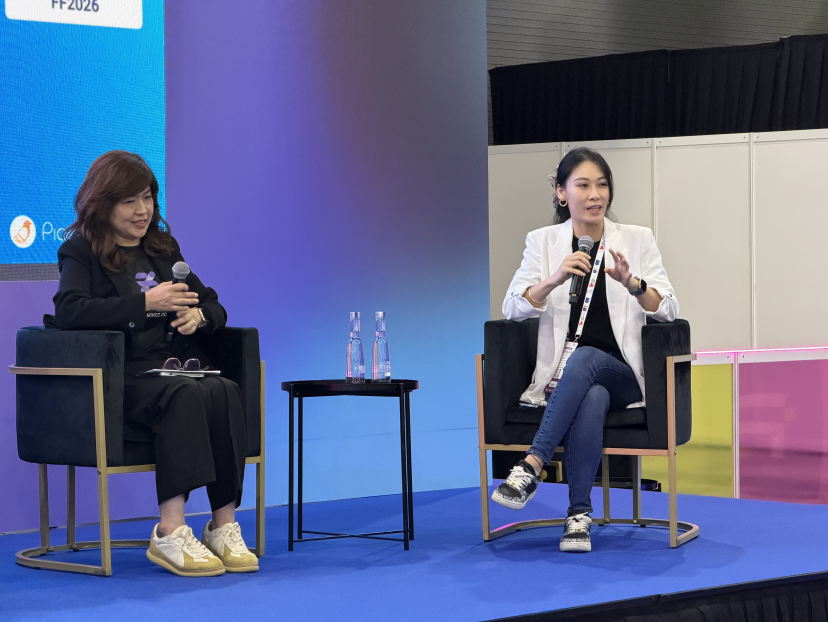
Smile Huang, VP Sales APAC at Whale, took the diagnosis one step further: most AI projects don't fail because the technology isn't good enough. They fail because the AI never embeds into real workflows.
The patterns are familiar:
Top-down rollouts that never reach the frontline
No clear daily value for the people who are supposed to use the tools
Tools that sit outside the workflow — deployed, but unused
Beng reinforced the point: without frontline buy-in, even the best solution struggles to take hold.
The implication is significant. AI transformation isn't really a technology project — it's a change management project. Treating it as anything else is one of the most common reasons initiatives stall right after the pilot.
Part 2: What Actually Works
03. Scenario-Driven, Start Small
When the conversation moved to implementation, Smile laid out a simple framework:
Right tool × Right use case × Right scenario
Instead of building large, all-in-one platforms or chasing whatever the market is hyping, the path that works is the opposite:
Find a specific use case where the value is easy to see
Start with a focused implementation
Scale gradually, once it's proven to work in one place
The first successful use case matters far more than how fast you scale — it's what builds the internal credibility and operational muscle for everything that follows.
Start small, but actually start.
04. From Black-Box Operations to Systems You Can Run
In F&B and retail, one challenge has stuck around for decades: frontline operations are largely invisible to headquarters. The things that matter most — store execution, service quality, hygiene and compliance, operational efficiency — are usually managed through manual checks and slow feedback loops.
The result is a black box. Teams see the outcomes, but not the behaviors driving them.
This is where AI changes the equation. By turning frontline activity into structured, observable data and layering real-time analysis on top, operators can:
Get continuous visibility into what's happening across stores
Surface patterns and inefficiencies that manual audits would never catch
Turn those insights into decisions — fast enough to act on
It's a shift from running operations on experience to running them on data — and for multi-location businesses, it's increasingly what separates the brands that scale well from the ones that scale into chaos.
Closing Thought
One line from the panel summed up the whole conversation:
Don't start with AI. Start with a problem worth solving.
AI isn't just a set of tools. It's a capability — one that takes the messy, invisible parts of a business and turns them into something you can see, measure, and act on.
The real divide in the industry isn't between companies that use AI and those that don't. It's between the ones that can embed AI into real operational scenarios — and the ones that can't.
That's the work ahead. And it's the work Whale is committed to, alongside our partners across F&B and retail.
- Whale Secures $60 Million to Expand its Enterprise AI Suite Globally
- Energy, Passion, and the Future of AI
- Insights from Singtel AI Talk: The Future of AI in Retail
- Whale 2026 H1 All Hands: A Fresh Start with AI, Into a New Phase
- Beyond the Hype: What It Actually Takes to Make AI Work in F&B and Retail
- How Enterprises Can Leverage AI to Boost Collaboration, Productivity, and Scale
- Whale Debuts Enterprise AI Partner Platform at NRF APAC 2026, Redefining How Businesses Operate with AI
- Whale at Shenzhen Tour: The Next EV Battleground Is the Operational Excellence
- Introducing Echo
- Check Out Whale's Open Space, Where AI Meets the "Lead to Win" Spirit
- Revolutionizing Production Management with AI
- AI Audit: Why More Enterprises Are Rethinking Inspection
- How GIORGIO ARMANI Redesigned Success Metrics Across Multiple Stores
- 3 Ways to Improve Conversion Rate for the Automotive Industry
- How SpaceSight Works in Standardizing and Improving Operational Efficiency for Car Workshop
- How GXG Leveraged Footfall Analytics for Smarter Employee Management
- From Browsing to Buying: Use SpaceSight to Optimize Sales Through Product Placement
- How Supermarket Chains Improve Inspection Efficiency with Smart Technology
- Four Management Practices to Ensure Food Safety in Your Kitchen
- How SpaceSight Improved Inspection Efficiency for Chain Restaurants
- Build Consistent Customer Dining Experience with SpaceSight Onsite Inspection
- Why Retail Managers Need Inspection Software for Store Management
- How to Use Footfall Analytics to Improve Customer Service
- Navigating the Future of Retail with AI with OPPO Indonesia












 English (Singapore)
-
 Schedule a demoProfessional consultants will provide a brief explanation lasting at least 20 minutes to help you evaluate and use Weve products more efficiently. Please leave your contact information, and we will contact you as soon as possible to schedule a demonstration time.
 -
 Scan to followStay updated with the latest news anytime, anywhere
 TikTok Channel
 LinkedIn Official Account
 -

-
 Customer Service CenterProvide one-on-one consultation and technical support for products and solutions
-
 Back to top